BUSINESS ETHICS
Business ethics can be denoted as written or unwritten codes of morals, values, and principles. That governs actions and decisions in a company. In the business world, standards are set for determining good and bad behavior and decision-making. ... Thus, business ethics leads to a more productive workplace..
HUMAN RESOURCES
Human resources- Human resources (HR) is the department within a business that is responsible for all things worker-related. That includes recruiting, vetting, selecting, hiring, onboarding, training, promoting, paying, and firing employees and independent contractors.
Why Ethics in HRD?:
Ethics is not a cosmetic of life. It has to be an
inherent quality of an individual, whether in business or
society for various reasons described below. Ethics is
important to business in general and HR manager in
particular..
Major Issues in Ethical Management
Some of the major issues an organization deals with is handling ethical challenges in workforce diversity.
The following are some of the major ethical challenges an organization faces in ethical management −
Harming Some While Benefitting Others
HR managers do much of the screening while the hiring process is still on. By its very nature, screening leaves some people out and permits others to move forward. In short, the ones left out will be affected by not getting the job, no matter how much they need it.
HR managers can neglect the emotionalism of such situations by adhering strictly to the skill sets and other needs of the position, but there will always be a gray area where HR managers may scale how much each applicant wants and needs the job.
Equal Opportunity
The HR managers must regularly monitor the company's hiring practices to make sure there is no discrimination in the hiring process based on ethnicity, sexual orientation, race, religion and disability. However, simply abiding with Equal Employment Opportunity Commission (EEOC) guidelines does not guarantee ethical behavior.
For example, if an HR manager recommends a candidate in order to fill a quota, that decision is unethical, because it will remove other applicants that may be more qualified.
Privacy
Privacy is always a sensitive matter for an HR manager. Though a company culture may be friendly and open and motivates employees to freely discuss personal details and lifestyles, the HR manager has an ethical obligation to keep such matters private. This specifically comes into play when the competing company calls for a reference on an employee. To remain ethical, HR managers must abide with the job-related details and leave out knowledge of an employee's personal life.
Compensation and Skills
HR managers can suggest compensation. While these recommendations may be based on a salary range for each position, ethical dilemmas arise when it comes to compensating employees differently for the same skills.
For example, a highly sought-after executive may be able to negotiate a higher salary than someone who has been with the company for several years. This can become an ethical problem when the lower-paid employee learns of the discrepancy and questions whether it is based on characteristics such as gender and race.
Human resources departments must handle a host of ethical and legal issues from the regulations of the EEOC to the principles and practices of organizations such as the Human Resource Management Institute
Labor Costs
HR must cope with conflicting needs to keep labor costs as low as possible and to invite fair wages. Ethics come into action when HR must select between outsourcing labor to countries with lower wages and harsh living conditions and paying competitive wages.
While there is nothing illegal about outsourcing labor, this issue has the potential to build a public relations problem if consumers object to using underpaid workers to save money.
Opportunity for New Skills
If the HR department selects who gets training, it can run into ethical issues. As training is a chance for development and broadened opportunities, employees who are left out of training may debate that they are not being given equal opportunities in the workplace.
Fair Hiring and Justified Termination
Hiring and termination decisions must be made without regard to ethnicity, race, gender, sexual preference or religious beliefs. HR must take precautions to eliminate any bias from the hiring and firing process by making sure such actions adhere to strict business criteria.
Fair Working Conditions
Companies are basically expected to provide fair working conditions for their employees in the business environment, but being answerable for employee treatment typically means higher labor costs and resource utilization.
Unethical issue of HR
1. Misusing company time
Whether it is covering for someone who shows up late or altering a time sheet, misusing company time tops the list. This category includes knowing that one of your co-workers is conducting personal business on company time. By "personal business" the survey recognizes the difference between making cold calls to advance your freelance business and calling your spouse to find out how your sick child is doing..
2. Abusive behavior
Too many workplaces are filled with managers and supervisors who use their position and power to mistreat or disrespect others. Unfortunately, unless the situation you're in involves race, gender or ethnic origin, there is often no legal protection against abusive behavior in the workplace.
3. Employee theft
According to a recent study by Jack L. Hayes International, one out of every 40 employees in 2012 was caught stealing from their employer. Even more startling is that these employees steal on average 5.5 times more than shoplifters ($715 vs $129). Employee fraud is also on the uptick, whether its check tampering, not recording sales in order to skim, or manipulating expense reimbursements. Ethical alert: The FBI recently reported that employee theft is the fasting growing crime in the U.S. today.
4. Lying to employees
The fastest way to lose the trust of your employees is to lie to them, yet employers do it all the time. One of out every five employees report that their manager or supervisor has lied to them within the past year.
5. Violating company internet policies
Cyberslackers. Cyberloafers. These are terms used to identify people who surf the Web when they should be working. It's a huge, multi-billion-dollar problem for companies. A survey conducted recently by Salary.com found that everyday at least 64 percent of employees visit websites that have nothing to do with their work. Who would have thought that checking your Facebook page is becoming an ethical issue?
The good news from the ERC study is that most American workers and employers do the right thing. The survey reveals that most of us follow our company's ethical standards of behavior, and we are willing to report wrongdoing when we see it (unless it's the company's Internet use policy). But for those of us who track ethical behavior in the workplace, there are some troublesome trends in the ERC survey. The percentage of employees who experienced some form of retaliation for reporting non-ethical behavior climbed from 15 percent to 22 percent. Confidence in the ethics of senior leaders declined from 68 percent to 62 percent. When it comes to the ethical workplace, we may be on a downward shift.
ETHICAL AND UNETHICAL ISSUES Of MARKETING
MARKETING-
Marketing is the study and management of exchange relationships. It is the business process of creating relationships with and satisfying customers. Because marketing is used to attract customers, it is one of the primary components of business management and commerce.
Ethical Issues and Their Impact on Marketing
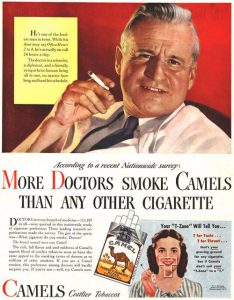 Advertisements are a great way to spread knowledge about a product or service, but sometimes the messages in advertisements are questionable. Vintage advertisements from the 1950s and 1960s, for example, were created in an era with far less oversight. Today, many of these ads are more offensive and unethical than persuasive. If you look at an ad for Camels cigarettes from the 1950s, you’ll see a doctor smiling while holding a cigarette, and the caption, “More doctors smoke Camels than any other cigarette”. This ad demonstrates hypocrisy, since doctors spend their careers advocating for healthy lifestyles. It also sends a message to society that if doctors are smoking, then it must not be all that bad.
In marketing, the strategy of promotion is used to gain the interest of consumers and to persuade them to try a product or service, but too often, the objectification of women is implemented in this strategy. Carl’s Jr. is well known for doing so. Since 2000, the majority of their advertisements include models eating hamburgers and wearing revealing clothing. Carl’s Jr. defends their actions by saying “We believe in putting hot models in our commercials, because ugly ones don’t sell burgers.” Because of their unethical choice to objectify women, many women believe they are not the target audience, but that males age 18 – 35 are.
Ethical and Unethical Data Collection
Before a new product or service is released, research is conducted to gain feedback on how well it will test in the market. An ethical marketing research strategy used to gain this information is focus groups. The main purpose of focus groups is to get the consumers’ opinions, beliefs, or perceptions about a product or service. This form of qualitative research consists of a moderator that interviews a small group of people, or respondents. The interview is set up in an informal way, so the respondents are free to give their stance without restrictions.
Another strategy is data collection. Many websites like Google, Facebook, and Amazon collect their users’ data, including web search habits, name and contact information, and location. They use this to build a profile of their customers which they then use to show ads for products and services that are tailored to consumers’ interests. Data privacy issues are currently a very hot topic – there is a serious trade-off between protecting individual privacy, and building more effective marketing strategies.
Growth Hacking
“Growth Hacking” is the practice of using automatic friend invites and push notifications from apps to try to pull in your friends lists. “Growth Hacking” pushes the ethical boundaries of what consumers will accept from marketers – many consumers see this as such a turn-off that they will discontinue the service entirely. From a business perspective, saving customer data for future use can also be a major legal problem, even if you try to discontinue use of the service. This is an evolving field in marketing. Just like the cigarette ads are considered silly and offensive today, these types of marketing practices could either become the norm, or serve as an example of bad practice when looking back.
Ethical Standards in International Markets
 Culture has a big influence on ethical principles since it refers to a set of values and attitudes that are shared among a group of people. However, not all cultures are the same which makes ethics vary among countries. Ethical standards should be relevant to international markets and should be equal in all markets, meaning that ethical practices carried out in the home country should be carried out internationally as well. Avon ( AVN)is committed to this. The marketing strategy they use to distribute their products in Asia, Europe, and South America, is the same marketing strategy they use in the United States: Direct Selling. Avon recruits many local sellers, who then market the beauty products individually to friends, professional contacts, and others. By using this direct marketing strategy, Avon tries to make sure its marketing efforts are specifically tailored to micro-markets, avoiding ethical complications.
At the same time, this same strategy has potential for abuse. Herbalife ( HLF) is constantly dodging lawsuits challenging that it operates as a pyramid scheme, making more of its money by requiring membership fees and minimum payments from its individual sellers than it does by selling its products. These lawsuits push the bounds of marketing ethics – a huge number of potential customers avoid Herbalife’s products entirely because of the allegations.
Unethical Behavior and Government Regulation
Unethical behavior is present in marketing and can include misleading marketing and advertising, price gouging, predatory pricing, unsolicited calls known as telemarketing, and unsolicited messages known as spam emails. To eliminate this, every business is legally obligated to disclose that their marketing practices are genuine and honest, and not violating the law. Unethical behaviors can harm consumers, so to protect them, the Federal Trade Commission works to limit unfair marketing practices. The agency also enforces the law that claims in advertisements must be true and cannot be unfair and deceptive.
As more marketers and advertising campaigns push ethical boundaries, the government is forced to step in to put hard limits on what can, and cannot, be done. Introducing government regulation means marketers are not only punished by public opinion for unethical behavior, but also face high fines and other legal penalties.
A Code of Ethical Behavior for Marketing
When it comes to marketing, a code of ethics should be put in place that imposes ethical principles on marketing practices. First and foremost, it should be mandatory for marketers to adhere to all laws and regulations. Marketers should accept responsibility for the consequences of their actions, and ensure that their decisions and actions satisfy consumers. They should be honest and uphold dignity when serving consumers and make sure the products and services they are offering are safe and match consumers’ intentions. Marketers should also disclose risks associated with the product or service, and avoid false advertising and misleading tactics.
Every company’s marketing approach is different, so every company should have a strong ethical code to guide their marketing efforts. Marketers should refer to this code before and during every marketing campaign – otherwise the company risks a serious public, and perhaps even legal, backlash.
The Connection Between Moral Philosophy and Marketing Practices
In the end, ethical choices are based on our personal moral philosophy. Our moral philosophy is based on the kind of society we live in and what we surround ourselves with. Two kinds of moral philosophies that have a connection to marketing practices are moral idealism and utilitarianism.
 Moral idealism is a moral philosophy that no matter what the outcome, individual rights must always be protected. This philosophy can be found in the ethical practice of informing consumers of safety hazards in a product or service, or recalling a defective product no matter the cost, so long as consumers are protected.
Utilitarianism is based on the overall outcome and evaluates the costs and benefits of ethical behavior. It is when happiness in the greatest amount of people are considered the greater good. If the benefits are greater than the costs, then that behavior is ethical. Utilitarianism in marketing provides value to its consumers. Samsung achieves this by setting up cell phone charging stations in airports for passengers. This provides a valuable service to Samsung’s customers and even the ones who are not, since the charging stations can charge any device.
Marketing is not just about promoting and selling products to consumers. It’s about putting forth ethics in marketing practices to eliminate deception, and to guarantee that consumers are getting the most out of a product or service.
ETHICAL AND UNETHICAL ISSUES OF FINANCE
Finance in management-
Financial Management means planning, organizing, directing and controlling the financial activities such as procurement and utilization of funds of the enterprise. It means applying general management principles to financial resources of the enterprise..
Business Management:
Ethical Issues in Finance
There are many situations where you act without considering if it is ethical or not. For example, you would not think much of someone claiming personal traveling expenses as official traveling expenses to save tax. This was a clear example, where ethical and unethical conduct could be clearly demarcated. However, in practice, the line between ethical and unethical is quite thin. So, how do companies ensure ethical behavior?
Most large companies have a code of ethics—a set of general guidelines to encourage employees to behave ethically and responsibly. However, a code of ethics might do more harm than good especially if it lays stringent do's and don'ts. This might give the employees a false notion that anything if it is not specifically forbidden would be acceptable.
In addition to the company specific codes of ethics, companies and professionals are also bound by ethical codes of conducts of numerous professional organizations and institutions. For example, most independent accountants are members of the American Institute of Certified Public Accountants (AICPA) and must abide by the AICPA Code of Professional Conduct. Accountants who are members of the Institute of Management Accountants are bound by the Standards of Ethical Conduct of Management Accountants. Health care industry and the IT industry are bound by industry specific codes of ethics. These codes set minimum standards of conduct for members. Unacceptable actions can result in an individual's expulsion from the organization. In the organizational context, the company found indulging in unethical behavior may be ostracized from the industry and might face loss of reputation.
Recent scams, particularly in the accounting industry, might suggest that business and professions are resorting to more unethical conduct in today's age compared to previous decades. However, experts attribute this to new business situations and the resulting problems that are more complex. For example, companies are under tremendous pressure to show good results on a quarterly basis and this might lead to a situation where slight manipulations of financial numbers might seem justifiable.
Experts also agree that ethical behavior is governed more by the individual rather than the environment. There have been cases where whistleblowers have exposed unethical behavior or violations of the company's code of ethics and brought huge organizations down to their knees. But, these are rare instances. Research shows that whistleblowers are often sacked from their jobs and end in worse conditions than if they had kept quite. Such cases of violations of code of ethics breeds cynicism. It would appear that having no code is better than a written code of ethics. A company code of ethics is useful only when the company's actions are consistent with it. Only then can it be followed consistently within the company.
Once a code of ethics consistent with the actions of the company is established, it needs to be communicated across the company. Open communication of values and state of company affairs gives employees the perspective they need to take a decision when faced with an ethical question. The code of ethics should be reviewed on a periodic basis to ensure that it deals with current issues facing the employees. Involving the employees in the renewal effort would make the code of ethics more pertinent and powerful.

I must say u have done good work .. keep it up..👌
ReplyDeleteGood work
ReplyDeleteNice👍
ReplyDeleteGreat job..keep it up
ReplyDeleteWow
ReplyDeleteNice
ReplyDeleteMst
ReplyDeleteBht khub
ReplyDeleteGreat👏🏻💯
ReplyDeleteBest content
ReplyDeleteAwesome man🎉🎉👍👍
ReplyDeleteSuperb👌👌
ReplyDeleteGood job👌👌
ReplyDeleteWell done brother
ReplyDeleteGreat
ReplyDeleteHero bro 💪💯
ReplyDeleteGood for your education 👌👌👌
ReplyDeleteKeep it up bruuh👍👍
ReplyDeleteGreat Job god bless you
ReplyDeleteGood work 🤘
ReplyDeleteHappy to hear brother.gud pace. Keep it up.
ReplyDeleteContent ��������
ReplyDeleteGud work
ReplyDeleteGood....☘️☘️
ReplyDeleteKeep it up bro
ReplyDelete
ReplyDeleteI already knew you would do something good
#_____Dubey
Great job brother Keep it up!!
ReplyDeleteNicely penned down...I must say you have done a great work buddy��
ReplyDeleteGreat bro💯👌
ReplyDeleteGreat job bro☘️
ReplyDelete����
ReplyDelete��������
ReplyDeleteKeep it up ��
ReplyDeleteNice👌
ReplyDeleteThis article is mind blowing. I will want to suggest my friend ♥️��
ReplyDelete😍keep sharing ur thoughts
ReplyDeleteKeep it up 😊
ReplyDeleteWell written
ReplyDeleteGud job
Nice👍 keep going on Nd keep sharing your thoughts...
ReplyDeletePretty cool !
ReplyDeleteGreat👍
ReplyDeleteGood job bro👍
ReplyDeleteIt's really appreciating .keep it up !!
ReplyDeleteextremely appreciable, great going!
ReplyDeleteGood job keep on going and sharing information...😄🙄☠️👍👍👍👍
ReplyDeleteWell done,keep on going extremely appreciable
ReplyDeleteGood job👍👍👍👍
ReplyDeleteAmazing write-up!
ReplyDeleteShare your thoughts and opinions so that we can aware of these field too...
ReplyDeleteKnowledgeable and contentful article... gud one buddy
ReplyDeleteGood job👍👍
ReplyDeleteGood explanation..
ReplyDeleteGreat one
ReplyDeleteAppreciable job
ReplyDeleteGreat job
ReplyDeleteNice work
ReplyDeleteThanks for the wonderful content👍
ReplyDeleteGood one bro.
ReplyDeleteGreat job...
ReplyDeleteKeep it up ������
Wow good job �� keep it up ��
ReplyDeleteVery well explanation ����
Super bro
ReplyDeleteGood content
ReplyDeleteGood job
ReplyDeleteNice
ReplyDeletegreat ��
ReplyDeletePerfect �� written
ReplyDeleteAmbitious 🤞🤞
ReplyDeleteGreat work
ReplyDeleteNice
ReplyDeleteSuperb
ReplyDeleteGreat job 💯
ReplyDeleteKeep it up!!✌️👍
Marketing is the key component for any company inorder to grow or talking about their brand name. You can sell shit if you know how to market. Still, Keeping consumers in your mind, One should focus on the product as well. If you don't love to buy it, don't sell it. Your content looks so promising. Keep posting more such informative articles. Learning is fun!!
ReplyDeleteRegards
Priyanshu Raj
Priyanshu Raj
Good content
ReplyDeleteThis comment has been removed by the author.
ReplyDeleteGreat content
ReplyDeleteVery nice content, keep it up
ReplyDeleteNice views
ReplyDeleteThis comment has been removed by the author.
ReplyDeleteGood work
ReplyDeleteImpressive content
ReplyDeleteGood work
ReplyDeleteGreat job. ��
ReplyDeleteBeautifully written.It cleared all my doubts and gave a great detailed analysis
ReplyDeleteVery good work
ReplyDeleteNice
ReplyDeleteContent👍
ReplyDeleteYou are doing excellent work
ReplyDeleteKeep it up👍
Great
ReplyDeleteAmazing
ReplyDeleteIt's great man
ReplyDeleteReally amazing knowledge...
Superb
ReplyDeleteNice
ReplyDeleteSuperb
ReplyDeleteContent is good
ReplyDeleteGood job
ReplyDeleteKeep it up👍
Acha kar rahe
ReplyDeleteBht khub
ReplyDeleteAppreciated
ReplyDeleteNicely explained
ReplyDeleteGreat Job Bro,I Appreciate It.
ReplyDeleteAppreciated!
ReplyDeleteGood job broo��
ReplyDelete